The Go/No-Go call can no longer rest on uncertainty
Tracking geolocated to your exact venue, not your region. Information to decide, not to endure.
What a storm costs an outdoor event
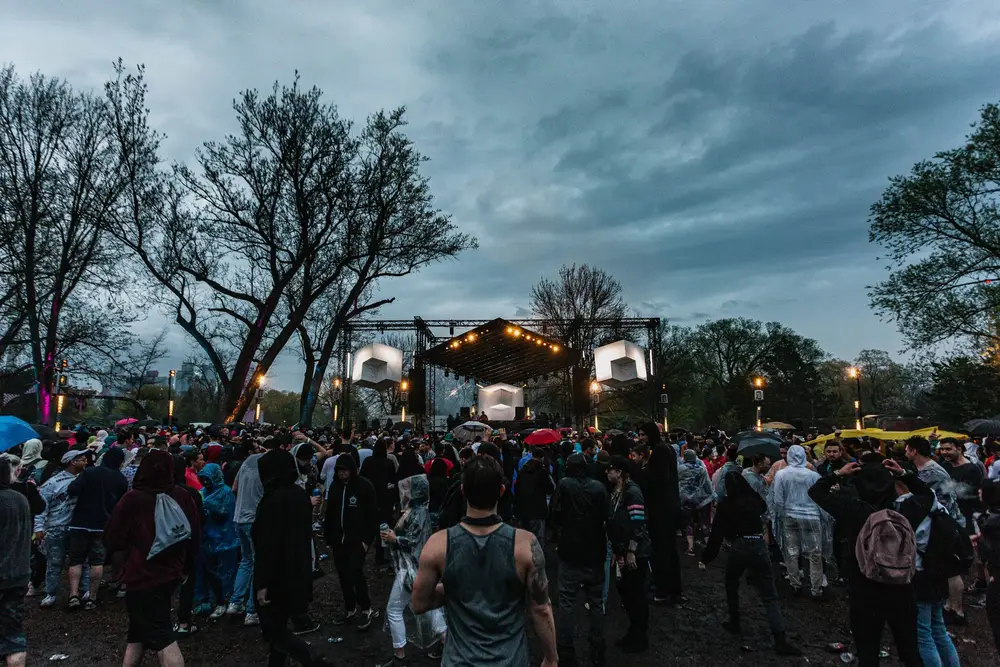
A festival cancelled at the last minute is a pile-up of simultaneous losses. The costs committed over months are only partly recoverable: artist fees, equipment rental, structure setup, mobilized technical staff. Expected revenue vanishes at once: ticketing, bars, catering, partnerships.
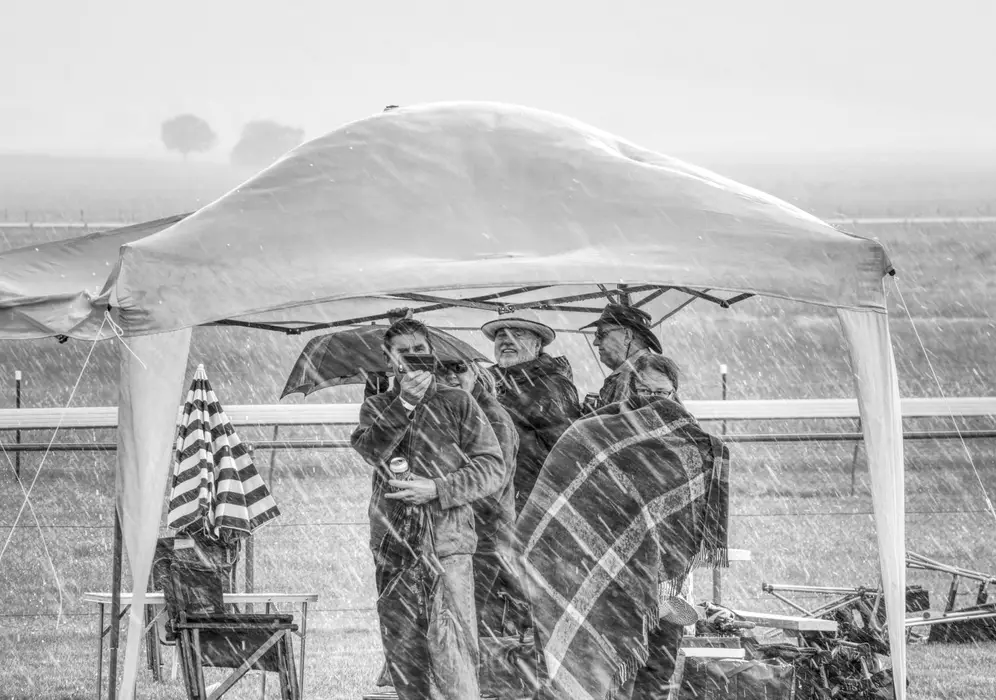
Conversely, an event that goes ahead despite a serious storm alert exposes the organizer to real human risk, and to a liability claim whose consequences can far exceed the cost of cancelling.
Between these two risks, the organizer has to decide. And to decide wisely, they need precise information, at the right moment.

The organizer's public liability: a concrete legal reality
Holding a public outdoor event creates a duty of safety toward the public. Taking out organizer public liability insurance is mandatory for any professional organizer. It covers damage suffered by third parties arising from the organizer's activity.
A cancellation decision documented on the basis of a precise alert is objective proof of a prevention effort. It is not a mere precaution: it is protection.
France records on average between 400,000 and 1 million lightning strikes per year depending on the year (Météorage). Peak activity is concentrated between June and August, precisely the high season for open-air festivals.
The problem with current alerts for outdoor events
A single, exposed site
An orange warning over the region doesn't tell you whether the storm will hit the Toulouse site or pass over Carcassonne. The relevant information concerns one precise geographic point.
Irreversible logistics
On the day, structures are up, artists are in their dressing rooms, the public is starting to arrive. Cancellation decisions can't be made at the last minute.
A concentrated, exposed crowd
An outdoor stage gathers thousands of people in an open space with metal structures. Evacuation takes time and must be prepared.
What Storm Predict changes for events
Tracking geolocated to your exact venue
Your event site is set up as a monitoring spot in Storm Predict. The platform tracks storm cells in real time and computes their forecast trajectory. You know whether an identified cell is heading toward your site, with what expected intensity, and in what time frame.
It is no longer "storm risk over the region." It is "storm cell estimated 2h45 from your site, with a 70% probability of direct impact, moderate intensity, light to moderate hail possible."
Four hours of lead time for organized decisions
Four hours is enough to trigger a gradual, orderly evacuation procedure. It is enough to decide to delay the gates opening. It is enough to alert providers and technical teams, reposition safety measures, and warn the public through your communication channels.
Managing a storm episode in three phases
Several hours before: continuous monitoring of active cells. Assessment of the forecast trajectory over the site. Decision to maintain, adjust the programme, or postpone.
1 to 2 hours before: if a cell is on track, the communication plan is triggered, safety teams are put on alert, shelter zones are prepared.
During the episode: real-time tracking of the cell's progress. Evacuation decision if needed, decision to resume as soon as the risk window has closed.
Documentation and insurance
Cancellation insurance contracts for outdoor events generally cover bad weather as a cause for cancellation. This cover is conditional on documenting the weather event that prompted the decision. Storm Predict keeps a timestamped history of every alert issued for the configured site, usable as part of claim procedures.
Service limits
Storm Predict does not predict the weather with absolute certainty. A confidence index is shown for every predictive trajectory. It does not replace the regulatory safety plan or professional event-safety providers.
Summary of benefits
Storm Predict for events
- Geolocated monitoring of the exact event site
- Differentiated alerts: lightning, hail, gusts
- Predictive trajectories up to 4 hours
- Real-time tracking on the day for the safety manager
- Real-time confidence index on every trajectory
- Timestamped alert history for insurance documentation
- Suited to single-day events and multi-day festivals alike
Your next event deserves better than a blanket alert
Every event has its own constraints. A 30-minute call is enough to see how Storm Predict fits into your organization.